|
November edition highlights:
|
This month’s Arable Update is packed with timely advice for the season ahead. For OSR growers, we look at getting ready for propyzamide applications and final autumn weed control.
For cereal growers, there’s advice on strengthening winter crops, tackling autumn weeds and preparing spring cereals for a strong start, alongside the latest innovation, news and practical agronomy tools from Corteva.
|
|
|
Getting ready for Propyzamide applications and final autumn broad leaved weed control in winter oilseed rape
Soil temperatures are falling, but at 11–13°C across much of the country, conditions remain slightly too warm for optimum propyzamide application, although Northern England and Scotland are now reaching suitable temperatures.
Aim to apply when soil temperatures at 30 cm are 10°C and falling, with adequate soil moisture and no heavy rainfall forecast in the following couple of days. With increasingly variable autumn weather, be ready to take advantage of suitable application windows, particularly where field access may deteriorate.
Applying too early can reduce persistence, while delaying too long allows blackgrass and ryegrass to become larger and more established. Large oilseed rape canopies are not a barrier to the efficacy of either Kerb® Flo 500 or Astrokerb®, with applications possible from the 3 true-leaf stage.
For broader autumn weed control, Astorkerb and Kerb Flo 500 can also be tank mixed with Belkar, providing additional activity on broad leaved weeds including cleavers, fumitory, mayweeds, shepherd's purse and cranesbill, as well as improving control of some cover crop or SFI species.
Where disease control is also required, Astrokerb and Kerb Flo 500 can be mixed with a range of fungicides targeting Phoma and light leaf spot, helping avoid an additional spray pass.
Watch our latest video to hear more:
|

|
FAQ’s
Does the extended clethodim application window change the interval required before Kerb Flo 500, Astrokerb or Belkar®?
No. Maintain a minimum 14-day interval between clethodim and Kerb Flo 500, Astrokerb or Belkar.
I applied LaDiva earlier in the season. What can I follow with?
Follow with Kerb Flo 500, +/- Belkar at 0.25 l/ha.
I have already applied Belkar at 0.25 l/ha. What can I follow with?
Follow with Kerb Flo 500 or Astrokerb, +/- a further Belkar application up to 0.25 l/ha.
What is the best option where ryegrass, blackgrass and broad-leaved weeds such as cleavers, fumitory and cranesbill are present?
Use Astrokerb at 1.7 l/ha + Belkar to provide a broad-spectrum approach across these grass and broad-leaved weeds.
Do I need a dry leaf when applying Kerb Flo 500 or Astrokerb?
Propyzamide is soil-acting, so a wet leaf or light rainfall after a Kerb Flo 500 application is not an issue. For Astrokerb, ideally allow 1 hour for the aminopyralid component to become rainfast. Application to a drying leaf is acceptable, but rainfall causing run-off within one hour may reduce efficacy. Always follow good water stewardship and avoid application where there is a risk of run-off into adjacent watercourses.
|
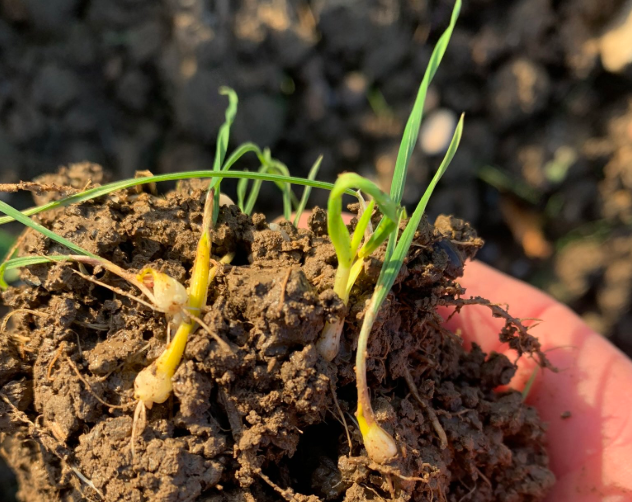
Propyzamide on winter beans
Kerb Flo 500 is a key pre-emergence option for grassweed control in winter beans, including blackgrass and ryegrass, alongside activity on broad-leaved weeds such as black bindweed, chickweed, fat hen, knotgrass, small nettle and speedwells. Apply at 1.7 l/ha within 7 days of drilling to a firm, clod-free seedbed, avoiding applications where heavy rainfall is forecast. Do not use on soils containing more than 10% organic matter and do not use on sands or light soils. Kerb Flo 500 can be used on all varieties of winter beans, with no more than one application to the same area within nine months. Astrokerb is not approved for use in beans due to crop selectivity.
|
|
Photo credit: Ryan Hudson
|
|
|
Kinsidro® Grow+: strengthen winter cereals before winter
As temperatures fall and day length shortens, maintaining crop development becomes increasingly important for winter cereals. Kinsidro Grow+ is a foliar biostimulant designed to support crop growth, nutrient use and resilience, helping support crop performance.
Build stronger crops from the roots up
In winter cereals, an autumn application of Kinsidro Grow targets establishment, root development and early vigour, helping crops head into winter stronger. Kinsidro Grow helps with faster early leaf growth, a deeper root system, greater storage of nutrients and better overwintering.
Kinsidro Grow+ is a sustainably sourced high-fulvic acid metabolic biostimulant that supports nutrient availability, root growth and photosynthetic efficiency. Its foliar application also increases chlorophyll content compared with untreated plants, supporting photosynthetic activity.
|
Why consider Kinsidro Grow+ this autumn?
- Supports root development to build a stronger foundation below ground.
- Encourages early crop vigour and above- and below-ground growth.
- Supports chlorophyll content and photosynthetic activity, helping drive crop growth.
- Supports resilience where unfavourable conditions can restrict crop growth.
- Helps prepare crops for winter by promoting deeper rooting, improving nutrient storage, and enhancing overwinter survival following autumn application.
|
|
|
Autumn cereal weed control
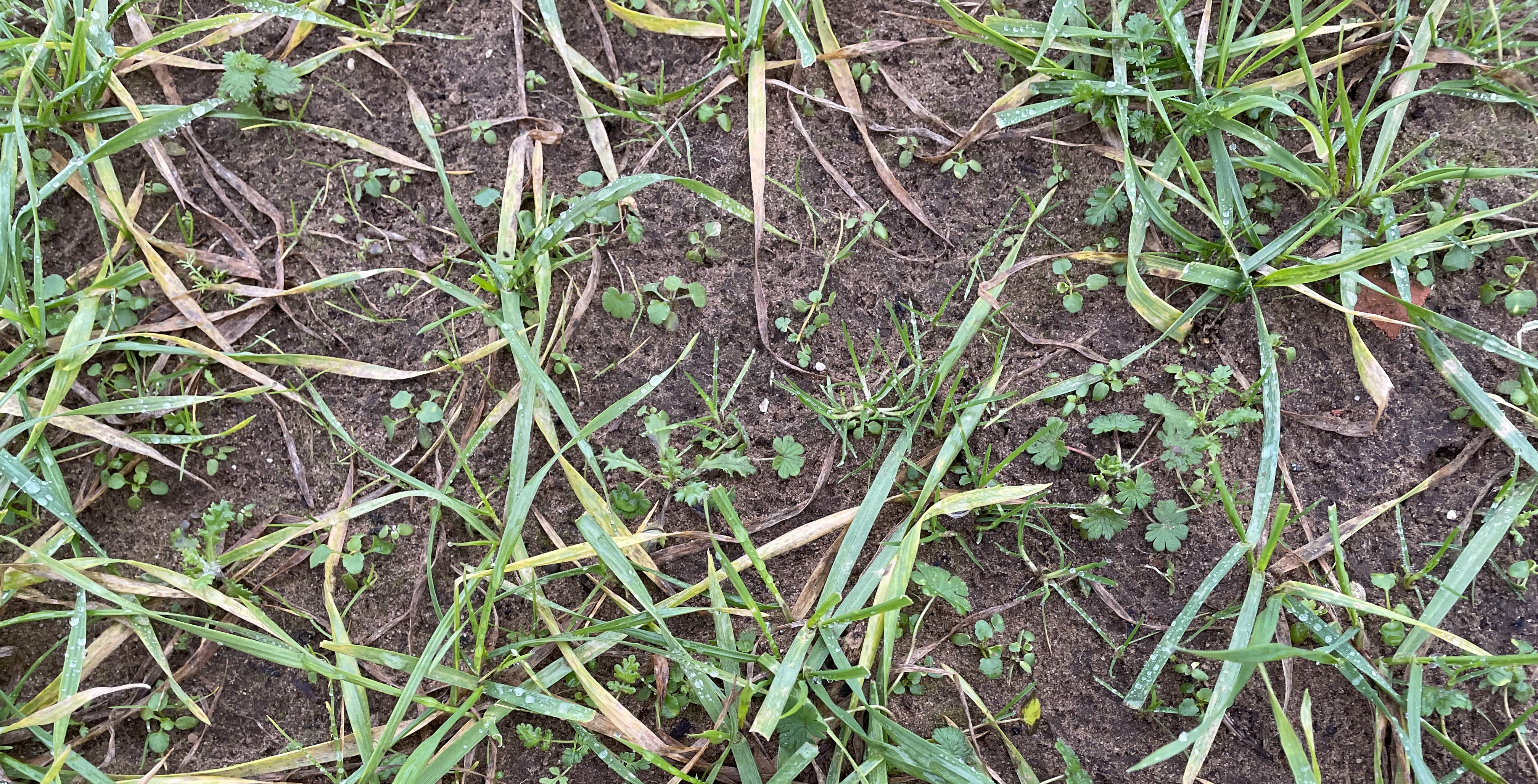
Early-drilled cereals and warm, dry autumn conditions can increase the risk of broad-leaved and grass weeds breaking through residual programmes. With a narrower spectrum of residual chemistry now available to what we have had available in the past, warmer conditions can also shorten their residual persistence, increasing the importance of monitoring crops closely and targeting emerging weeds while they are still small and actively growing.
For broad-leaved weeds, Zypar® and Spitfire® can be used from GS13, providing flexible control of key autumn weeds including groundsel, poppy, chickweed, cleavers, volunteer beans, brassicas and mayweeds. Spitfire can be applied at 0.75 l/ha in the autumn, increasing to 1.0 l/ha after 1 February. Groundsel is particularly important to tackle early, ideally around the rosette stage, before increasing maturity and leaf wax make control more difficult. Corteva studies have shown that the addition of an MSO adjuvant to Spitfire can also improve spray coverage and uptake on this challenging weed.
Grass weeds may also require an active follow-up to the residual programme. Where Italian ryegrass, bromes or tame oats have emerged, Broadway® Star provides a valuable autumn contact option alongside residual top-ups. For best results, target small, actively growing weeds, ideally Italian ryegrass and bromes at the 1 to 3-leaf stage, and tame oats at GS11–24, using Broadway Star at 265 g/ha plus adjuvant.
The key this autumn is to maintain the residual foundation, monitor fields for emerging weeds and use early spray windows to remove problem weeds before they become more difficult to control.
|
|
|
|
Ympact®: Give spring cereals a stronger start
Thinking ahead to spring cropping plans, now is a good time to consider how to give spring cereals the strongest possible start.
Spring crops have a relatively short growing season, so rapid and even establishment is particularly important. Ympact is a biostimulant seed treatment for cereals, designed to enhance seedling growth by optimising metabolic processes and tolerance to abiotic stress by helping with faster emergence, improved early vigour and more uniform establishment.
Ympact combines sustainably sourced humic and fulvic acid-like compounds with the micronutrients zinc, manganese and copper. These micronutrients are important for early crop processes including germination, enzyme activity, photosynthesis and chlorophyll production.
For spring cereals, building a strong root system from the outset is important with the unpredictable springs. Ympact supports early root and shoot development, helping the young crop explore more soil for available moisture and nutrients and providing additional support where establishment conditions are challenging.
|
Why consider Ympact for spring cereals?:
- Faster emergence and early vigour, helping establish a more uniform crop.
- Greater root development, improving the crop's ability to explore the soil for water and nutrients.
- Support under challenging establishment conditions, including situations where moisture availability may be limiting.
- A practical seed-applied approach that complements good seedbed preparation, drilling and establishment management.
|
|
|
Higher fertiliser prices. Tighter margins. What's the answer?
See how Instinct® and BlueN™ helped deliver both environmental and economic benefits in on-farm trials, improving nutrient use efficiency while maintaining crop performance. Read the full article here.
|
|
|
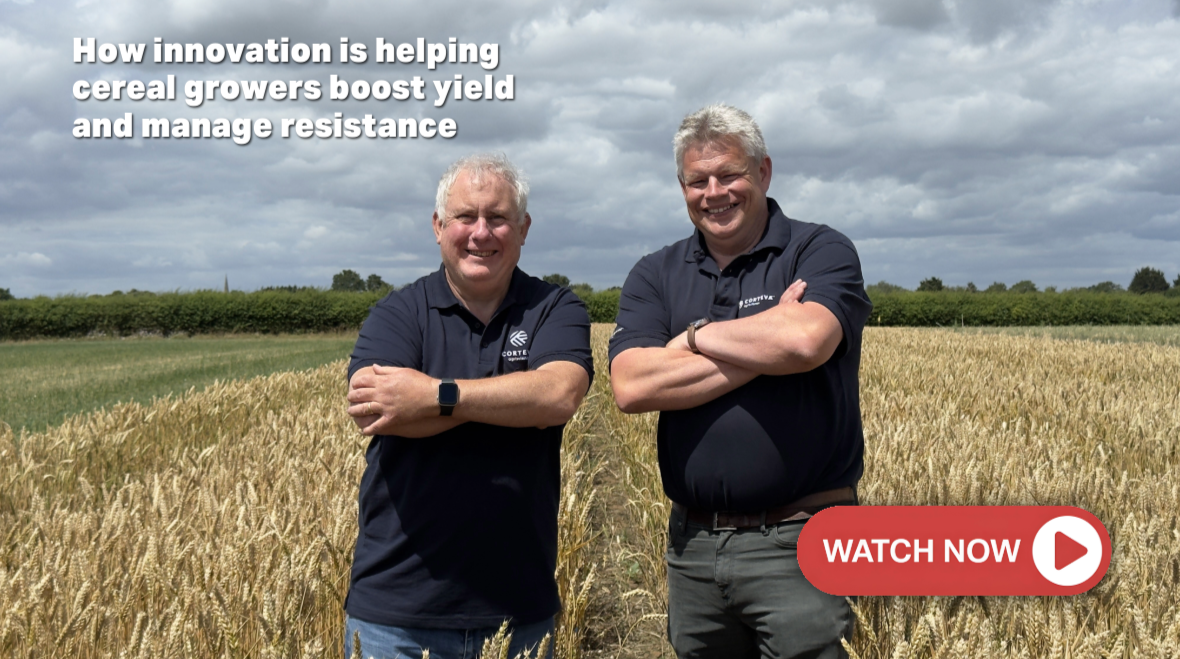
What does it take to help cereal growers succeed today and for generations to come?
Corteva Agriscience experts from across Europe and beyond share how innovation, research and long-term investment are helping tackle some of the biggest challenges facing cereal production. Watch our latest video to hear more:
|
|
|
|
News and views from the Corteva Team
|
|
|
|
Get to know Team Corteva:
This month, we're delighted to introduce the newest member of Team Corteva, Ed Brooks. Ed joins us as Area Manager for Southern England, covering Dorset, Hampshire, Somerset, Wiltshire and the Channel Islands. He is taking over these counties from Ryan Came-Johnson, as Ryan steps into his new role as Field Technical Manager for UK & Ireland Grassland and Maize, alongside his position as Area Manager for South West England. With 14 years of agronomy experience, Ed is looking forward to building relationships across the region and helping growers get the most from their crop protection programmes.
|

|
To find Ed's contact details, click here.
|
Want to get to know more of the people behind Team Corteva? Read more colleague stories and blogs here.
|
|
|
Make the most of Corteva's free agronomy apps
Whether you're in the field or at your desk, the Corteva Arable and Forage apps provide quick access to technical information, decision-support tools and practical agronomy advice.
Both apps are available for free on both Apple and Android devices, giving you easy access to Corteva expertise wherever you are.
For further information and download links for the Corteva apps, click here.
|

|
|
|
Want to hear more from us?
Update your preferences and tailor your choices to make sure you receive the communications that are right for you. Don't forget to enter into our monthly prize draw by ticking the box before submitting to be in with the chance to win!
You can also stay in the loop with all the latest updates by following @CortevaUK on X and Facebook, @CortevaUKI on Instagram, and subscribing to our @CortevaUKI YouTube channel.
|

|
|
|
Get in touch with our hotline team
|
USE PLANT PROTECTION PRODUCTS SAFELY. Always read the label and product information before use. For further information including warning phrases and symbols refer to label. ®, ™ Trademarks of Corteva Agriscience and its affiliated companies. All other brand names are trademarks of other manufacturers for which proprietary rights may exist. All manufacturers trade names and trademarks are duly acknowledged. © 2026 Corteva. Kerb® Flo 500 contains propyzamide. Astrokerb® contains aminopyralid and propyzamide. Belkar® contains halauxifen-methyl (Arylex™ active) and picloram. Kinsidro® Grow+ contains fulvic acid, humic acid, potassium oxide (10%), sodium oxide (3.75%), sulfur trioxide (6.25%), boron (0.04%), cobalt (0.04%), copper (0.04%), manganese (0.04%), molybdenum (0.005%) and zinc (0.05%). Zypar® contains florasulam and halauxifen-methyl (Arylex™ active). Spitfire® contains florasulam and fluroxypyr. Broadway® Star contains pyroxsulam and florasulam. Ympact® contains fulvic acid, humic acid, trace elements including copper (0.45%), manganese (0.74%), zinc (1.1%), boron, cobalt and sodium. Instinct® contains nitrapyrin. BlueN™ contains Methylobacterium symbioticum.
 | | | | |