|
September edition highlights:
|
- Planning weed control for the 2027 cereal crop
- Belkar® application window now open
- Don't let late blight deliver a sting in the tail
- Build yield potential from day one with Ympact®
- Instinct®: keep autumn nitrogen working for your crop
- Biologicals: supporting crop performance from establishment onwards
- Managing maize harvest and silage quality in drought conditions
- News and views from the Corteva Team
- Make the most of Corteva's free agronomy apps
- BASIS and NRoSO points
|
|
|
Planning weed control for the 2027 cereal crop
With harvest 2026 completed under very dry conditions and many growers considering earlier drilling, now is the time to start planning autumn weed control programmes for the 2027 crop.
While cost will be a major factor in decision-making this season, effective weed control remains one of the best investments growers can make. Uncontrolled grass and broad-leaved weeds compete with crops from the outset, reducing yield potential, increasing harvest difficulties and adding pressure to future rotations.
The current dry conditions may also create new challenges. Limited soil moisture can delay weed germination, not only reducing opportunities for stale seedbeds but also potentially leading to large flushes of weeds when rainfall eventually arrives. Understanding weed pressure before drilling and adapting plans accordingly will be key.
Start with the basics:
The most successful programmes combine cultural and chemical control measures. Stubble management, stale seedbeds, appropriate glyphosate use, cultivation strategy and drilling date all play an important role in reducing weed pressure before the crop emerges.
However, once the crop is established, herbicides remain a vital tool for protecting yield and crop competitiveness.
Focus on the key targets:
Italian ryegrass and bromes continue to be among the most challenging grass weeds facing cereal growers. Earlier drilling can increase risk by extending the weed emergence window and increasing competition within the crop.
A robust residual herbicide programme provides the foundation for control, particularly where grass weed pressure is high. In many situations, a follow-up treatment can help maintain efficacy through the autumn and improve overall programme performance.
Where ryegrass or bromes have emerged, pyroxsulam-containing products such as Broadway® Star can provide effective control of small, actively growing weeds while also delivering activity on a range of key broad-leaved weeds.
Think value, not just cost:
Reducing herbicide spend may appear attractive, but the cheapest programme is not always the most economical. Weed control decisions should focus on protecting yield, limiting seed return and delivering the best return on investment.
By combining integrated weed management with well-timed herbicide applications, growers can maximise crop competitiveness, reduce weed pressure and put the 2027 cereal crop in the strongest possible position.
|
Key takeaways:
• Dry conditions may delay weed emergence but increase the risk of large flushes later.
• Early-drilled crops can face greater grass weed pressure.
• Integrated weed management starts before drilling.
• Build programmes around the key weeds present in each field.
• Robust residual herbicides remain the foundation of control.
• Broadway Star provides post-emergence control of ryegrass, bromes and key broad-leaved weeds.
• Focus on long-term value and yield protection, not just upfront programme cost.
|
|
|
Belkar® application window now open
The Belkar application window is now open, giving growers the opportunity to tackle key broad-leaved weeds in winter oilseed rape from 1 September. Effective control of weeds such as cleavers, cranesbill, poppy, fumitory and shepherd's purse can help reduce competition for moisture, nutrients and light during crop establishment.
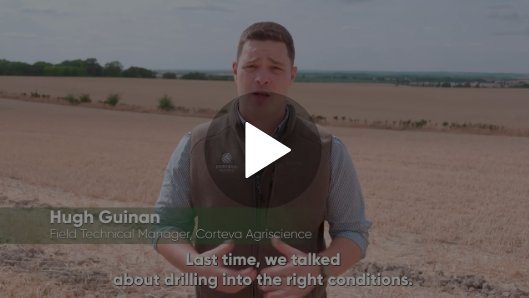
In our latest video, Hugh Guinan, Corteva Field Technical Manager, discusses the importance of early weed control in OSR and explains how Belkar can deliver flexible, reliable broad-leaved weed control as part of an autumn programme.
To watch the video, click here.
|
|
Looking for more agronomy advice to support your oilseed rape crop? Visit our OSR Hub for the latest technical content, crop management guidance and seasonal updates.
|
|
|
Don't let late blight deliver a sting in the tail
As crops move towards senescence and burndown, it remains important to maintain a robust late blight programme, particularly where crops are going into store. The greatest risk is likely to be in crops where spray intervals were stretched during the season, but the principle remains the same: maintain protection until there is no green tissue left in the crop.
Including Option® (cymoxanil) in the programme can provide valuable support at this stage by delivering genuine curative activity. Option can be applied up to eight times in mixture with a partner fungicide on a crop across the season, offering an additional mode of action and greater flexibility in late-season blight management. With a one-day pre-harvest interval (PHI), it also provides reassurance when managing crops approaching harvest and storage.
By finishing the season strongly and maintaining protection through to complete canopy senescence, growers can help minimise late-season blight risk and protect tuber quality in store.
|
Connecting with potato growers at Potatoes in Practice:
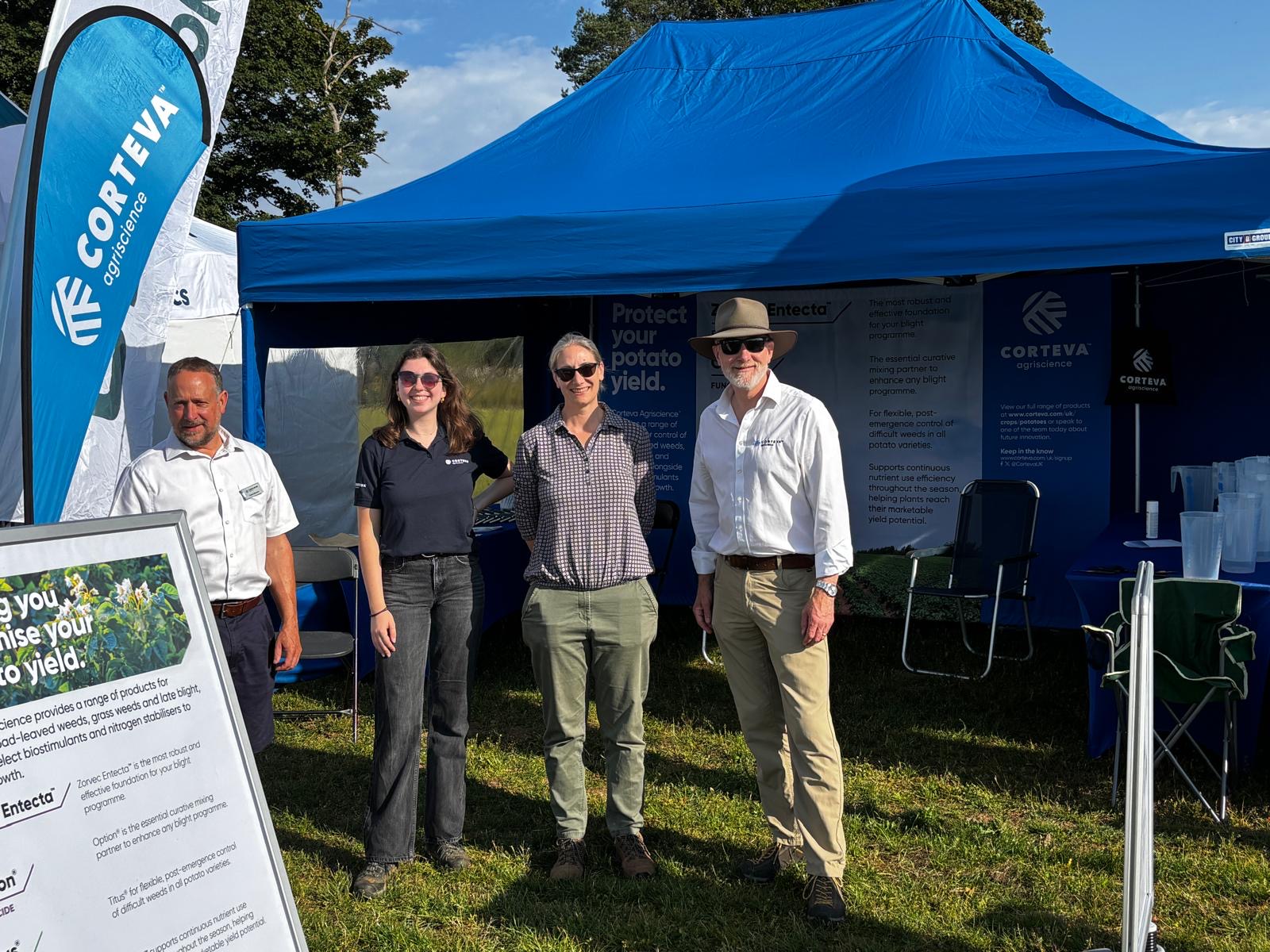
Team Corteva attended Potatoes in Practice last month in Dundee, where we showcased our range of solutions available for potato growers.
Events like these provide a great opportunity to discuss the latest challenges facing the industry, share technical expertise and learn more about the priorities of potato growers across the UK. Thank you to everyone who stopped by to chat with the team!
|
|
Learn and earn CPD points!
|
|
Follow the Crop 2026:
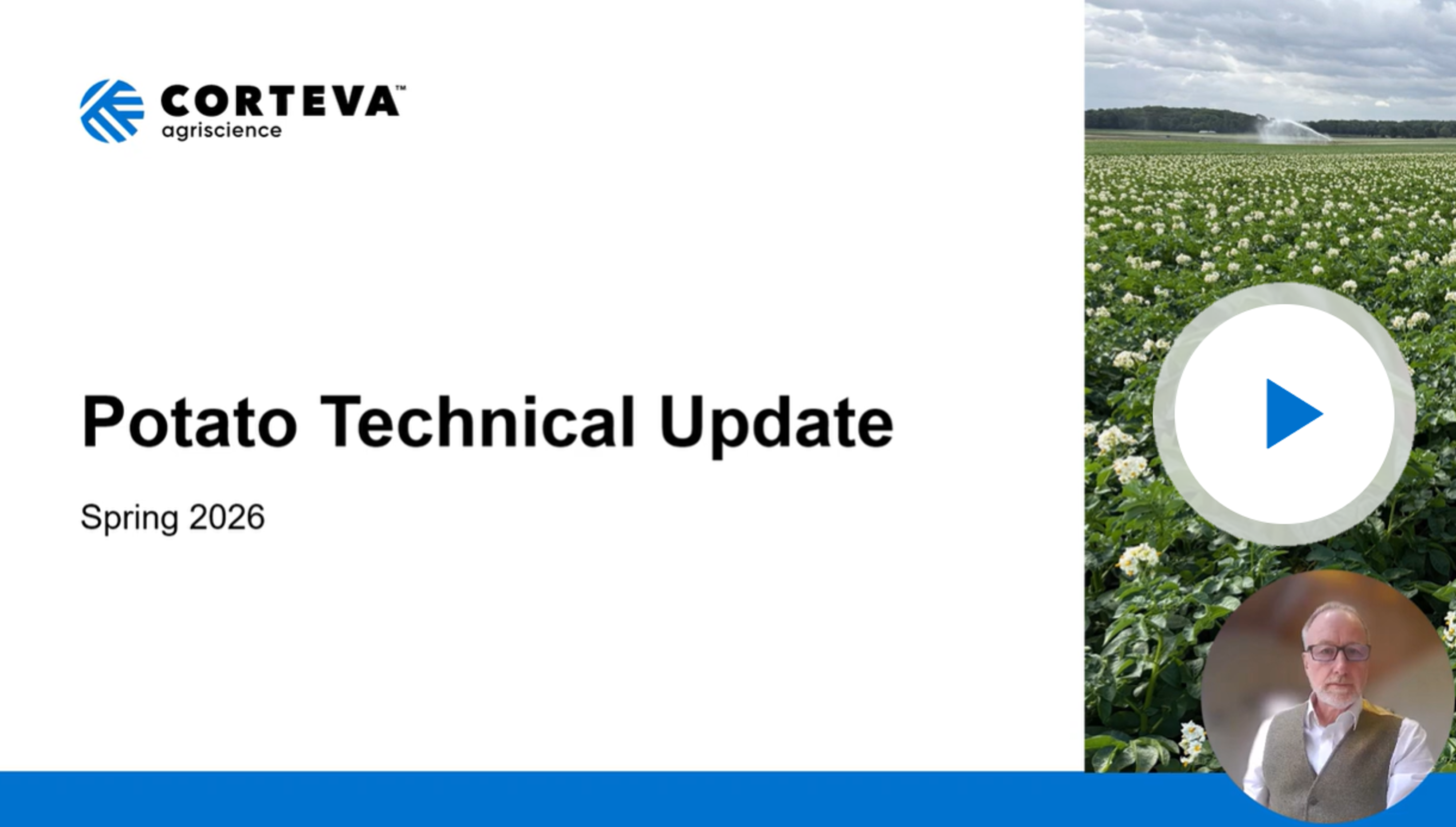
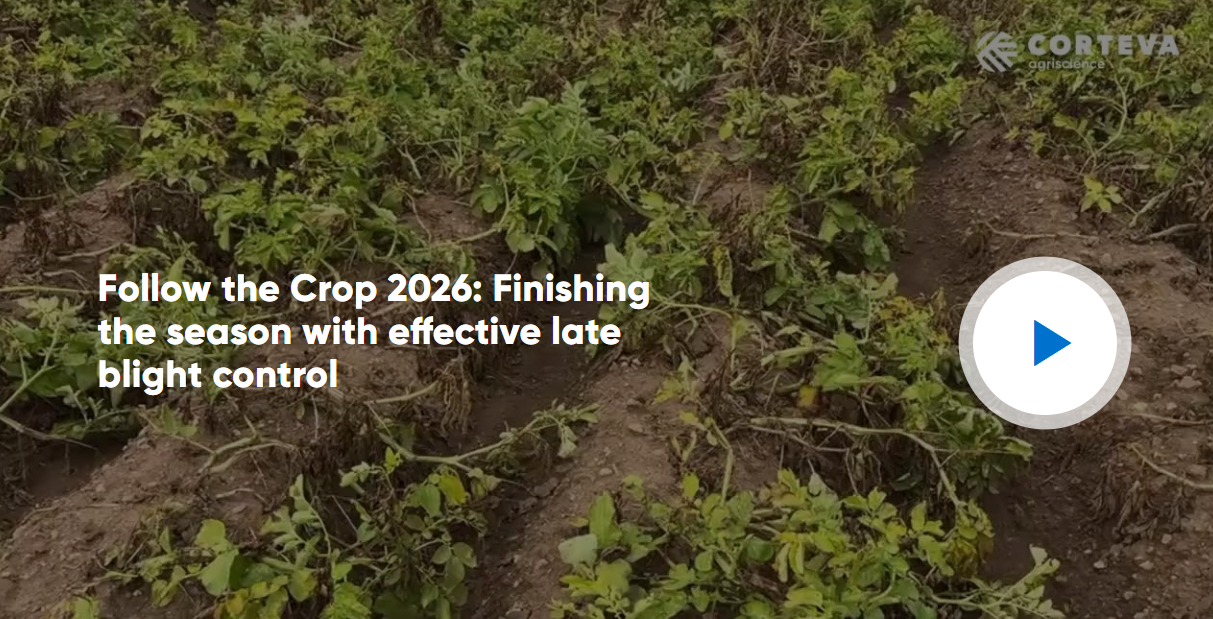
In the latest Follow the Crop video, Craig Chisholm, Field Technical Manager at Corteva Agriscience, discusses the importance of maintaining late blight protection as crops move into senescence and burn-down. He also highlights the role of Option in supporting late-season blight control and protecting crops heading into store.
|
|
Click here to watch the updates so far and stay tuned for more during the season.
|
|
|
Build yield potential from day one with Ympact®
September is a key month for cereal establishment, and with drilling conditions often variable, getting crops off to the strongest possible start can have a lasting impact on performance through the season.
Successful autumn cereals need rapid germination, strong rooting and the ability to cope with early-season stresses. Ympact is a seed treatment that combines humic and fulvic acid-based compounds with readily available zinc, manganese and copper to support crop establishment from the moment the seed begins to germinate.
Early autumn conditions can be unpredictable, with seedbeds ranging from dry and cloddy to wet and challenging. Ympact is designed to support faster emergence, improved root development and greater early vigour, helping crops establish more uniformly and access moisture and nutrients more effectively. Enhanced root growth and root hair development can be particularly valuable where crops face periods of moisture stress or variable establishment conditions following drilling.
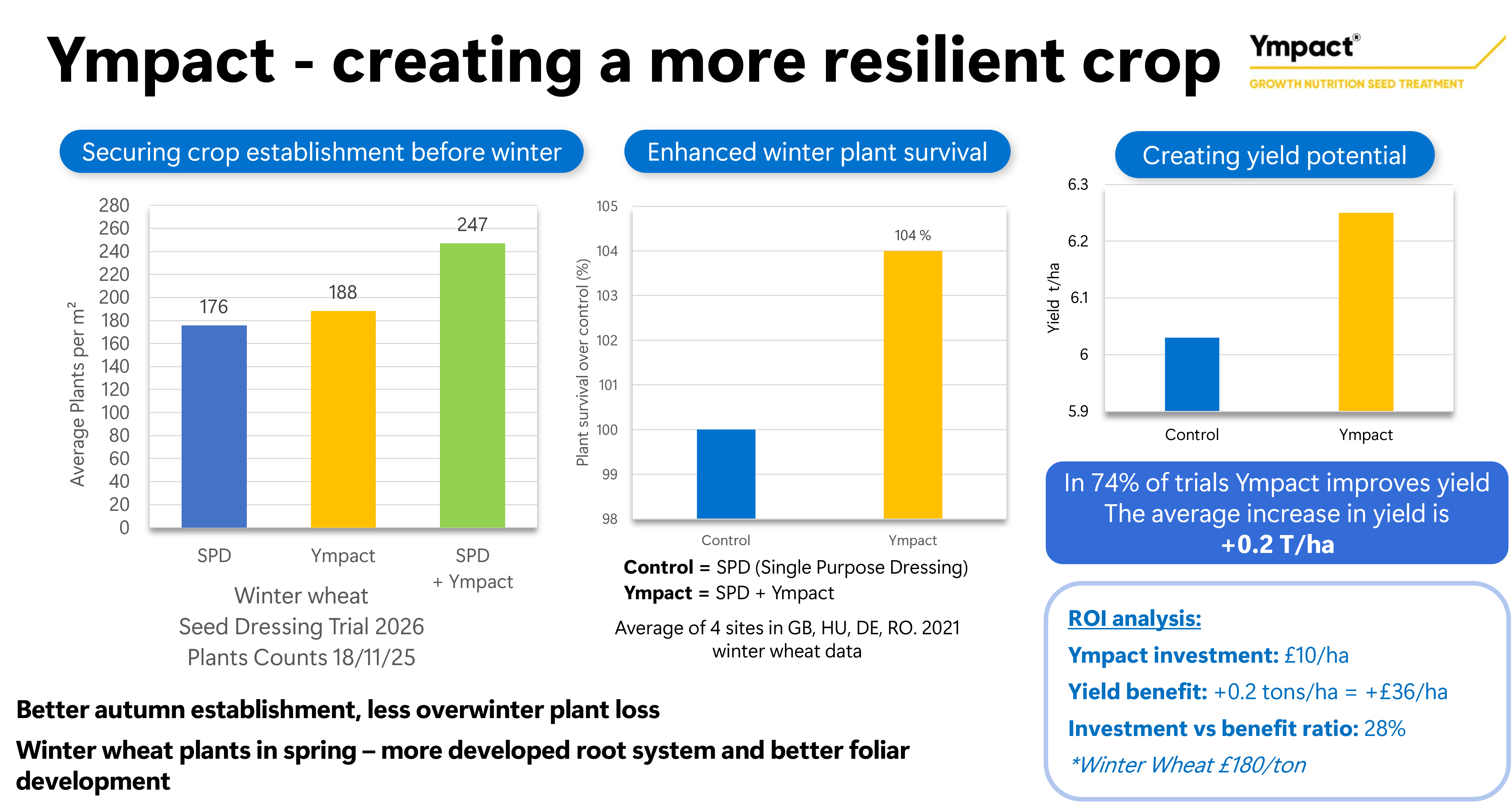
Across UK trials, Ympact has consistently improved crop establishment, root biomass and plant survival through the winter period, helping cereals build yield potential from the outset. In 74% of trials, Ympact delivered a yield benefit, with average increases of up to 0.2 t/ha recorded in winter cereals.
As autumn drilling progresses, Ympact offers a practical way to help crops establish quickly, improve resilience and maximise the opportunity to realise yield potential next season.
|
Key benefits of Ympact include:
• Faster crop establishment: supports quicker emergence and more even establishment across the field.
• Stronger rooting: promotes root development and improved nutrient uptake.
• Improved crop resilience: enhances overwinter survival and supports spring regrowth.
• Proven yield benefits: increased yield in the majority of cereal trials.
|
|
|
|
Instinct®: keep autumn nitrogen working for your crop
With autumn drilling underway and slurry, digestate and early nitrogen applications being planned, September is a timely opportunity to focus on protecting nitrogen before the wetter months arrive. Recent rainfall has improved soil moisture levels in many areas, making conditions more favourable for the use of Instinct.
Autumn-applied nitrogen is highly vulnerable to loss. Warmer autumn temperatures accelerate the conversion of ammonium to nitrate, while increased rainfall can move nitrogen below the rooting zone or lead to denitrification losses.
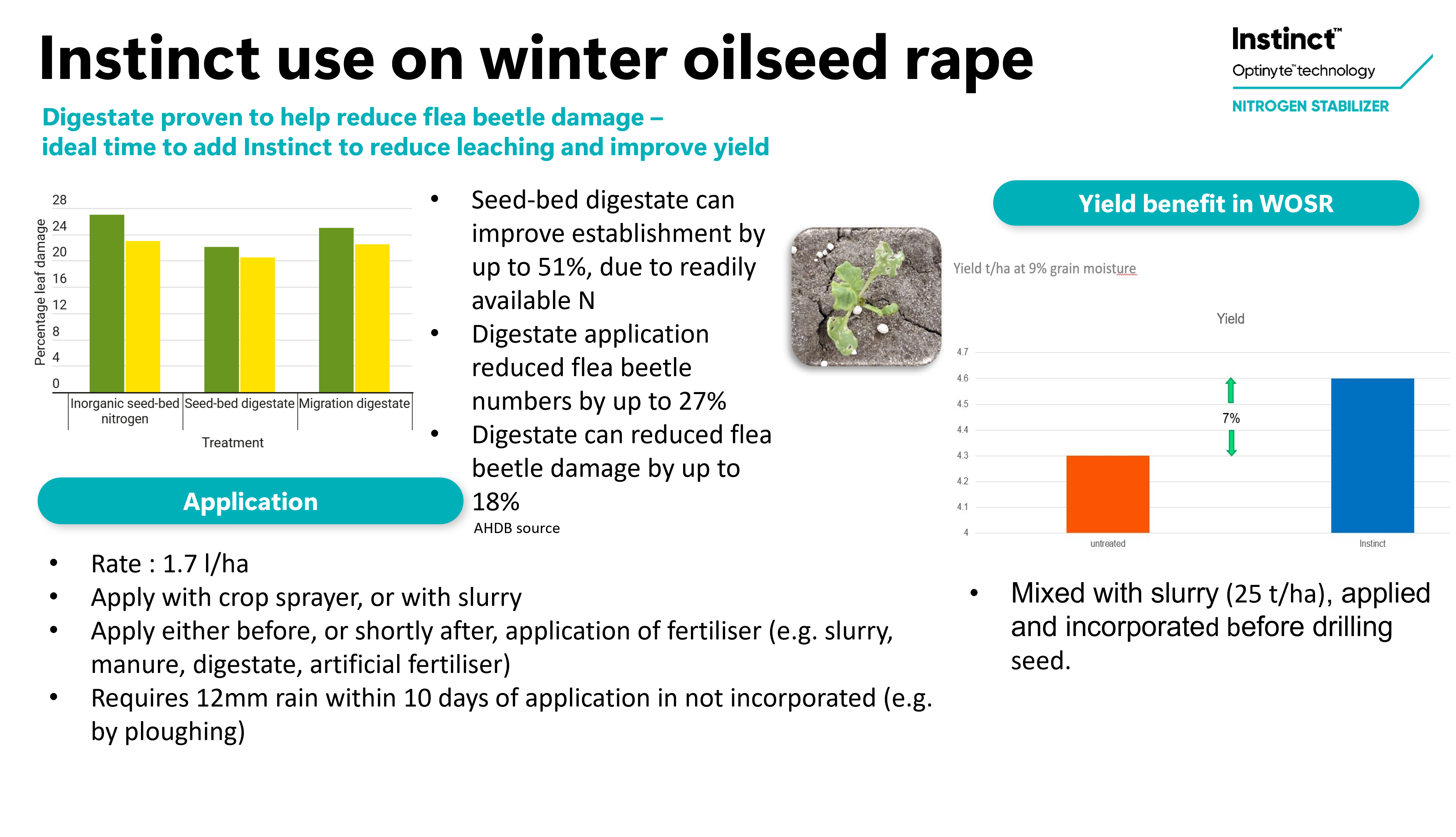
Instinct slows the conversion of ammonium to nitrate for around 10 to 12 weeks, helping to keep nitrogen available in the soil when crops need it most. By retaining more nitrogen in the root zone, Instinct helps improve nitrogen use efficiency, reduce environmental losses and support strong crop establishment through the autumn and winter period.
Instinct can be applied alongside slurry, digestate or ammonium-containing fertilisers in crops such as winter cereals and oilseed rape. Internal trial work has demonstrated reduced nitrogen losses, improved crop vigour and yield benefits where nitrogen availability has been protected through the autumn period.
|
By protecting nitrogen in the soil during the establishment period, Instinct helps to:
• Retain more autumn-applied nitrogen by reducing losses through leaching and denitrification.
• Maintain a readily available nitrogen supply to support crop establishment and overwinter development.
• Improve nitrogen use efficiency by keeping nutrients in the rooting zone for longer.
• Support more sustainable nutrient management through reduced nitrogen losses and better utilisation.
|
|
|
|
Biologicals: supporting crop performance from establishment onwards
Biological products are designed to complement conventional agronomy programmes by supporting plant physiology and helping crops perform more consistently through challenging growing conditions. Corteva's biological portfolio offers tools that work alongside established crop management practices to help crops make better use of available resources and build stronger yield potential.
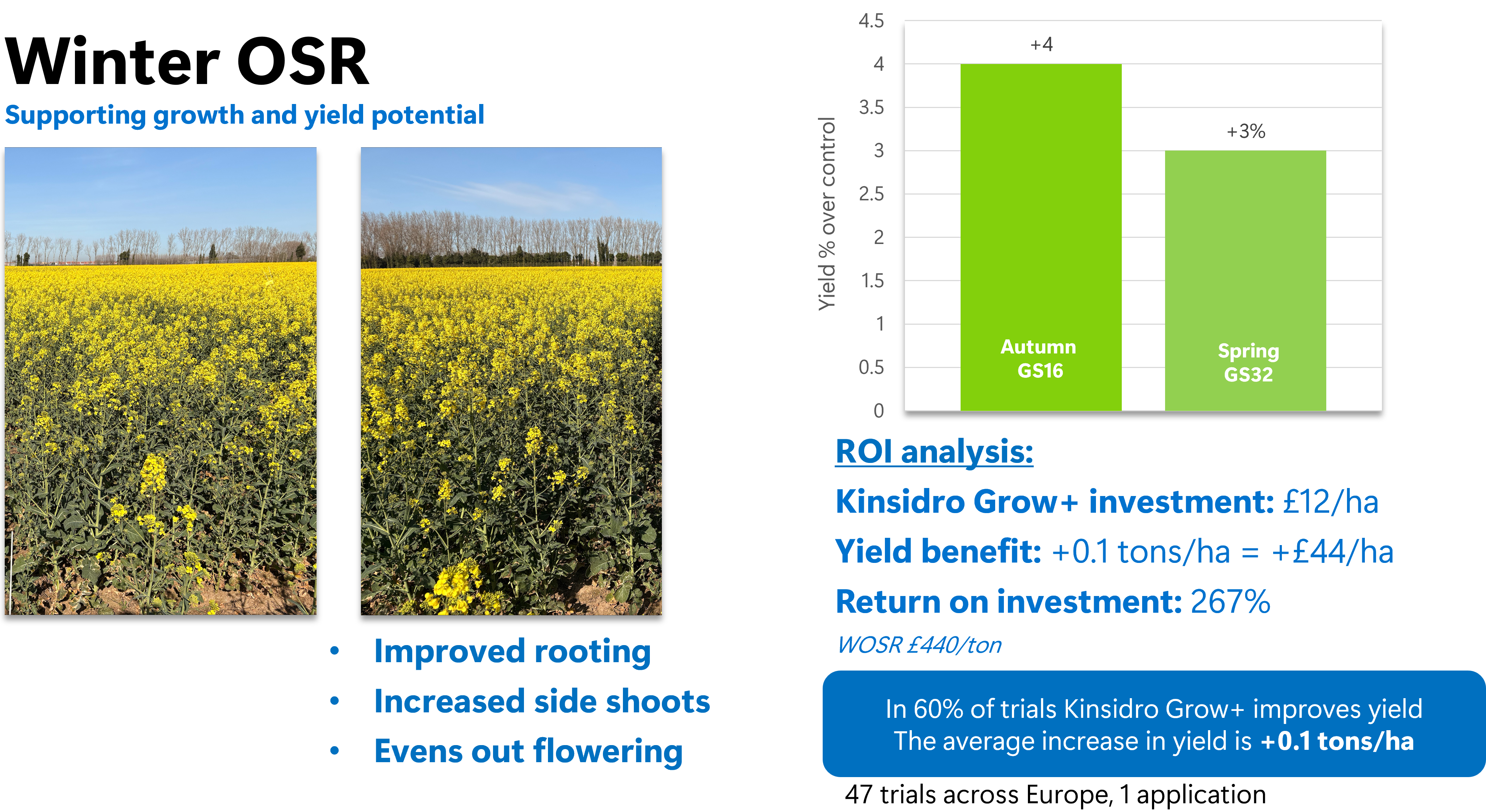
For autumn-sown cereals and oilseed rape, establishment remains a key priority. Kinsidro® Grow+ supports root development, nutrient uptake and photosynthetic efficiency, helping crops enter winter with stronger biomass and improved resilience. Recent trials have shown improvements in rooting, vigour and yield potential when crops receive this physiological support.
Kinsidro Grow+ is a high-fulvic metabolic biostimulant designed to support crop productivity by improving nutrient availability, root growth and photosynthetic efficiency. Applied in the autumn, it helps strengthen both above and below-ground growth, supporting root development, early vigour and crop resilience as plants enter the winter period.
|
Together, these benefits help crops establish strongly and build resilience for the season ahead through:
• Complementing conventional agronomy programmes to support strong crop performance.
• Promoting strong crop establishment, the foundation for seasonal success and yield potential.
• Supporting root growth, nutrient uptake and plant vigour, helping crops better tolerate challenging autumn growing conditions.
|
|
|
|
Managing maize harvest and silage quality in drought conditions
Following one of the driest growing periods in recent years, maize growers across the UK are facing difficult decisions as drought stress continues to impact crop development, yield potential and forage quality.
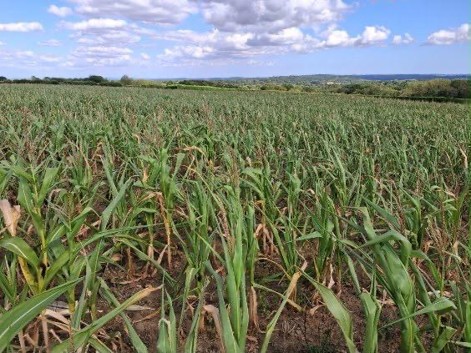
While maize is often considered more resilient to dry conditions than many other forage crops, prolonged periods of heat and limited rainfall can significantly affect plant growth. In many areas, crops have shown visible signs of stress, including leaf rolling, premature senescence, reduced plant height and poor cob development. As harvest approaches, assessing these fields correctly will be critical to maximising both yield and feed value.
The impact of drought on maize:
When soil moisture becomes limited, maize plants conserve energy by reducing growth and metabolic activity. As drought conditions persist, plants may produce shorter internodes, less biomass and reduced grain fill.
Particularly concerning is drought stress during flowering and pollination. If moisture levels are insufficient at this stage, pollination can be compromised, resulting in poor kernel set or, in severe cases, little to no cob development. Since the cob contributes a significant proportion of the starch and energy content within maize silage, this can have a major effect on the nutritional value of the final forage.
|
As a result, growers may find themselves harvesting crops with:
• Lower starch content.
• Reduced energy values.
• Poorer digestibility.
• Greater variation in dry matter across the field.
|
Harvest timing becomes critical:
One of the biggest challenges in a drought year is determining the correct harvest date. Unlike a typical season, drought-stressed crops can appear mature due to leaf death while still containing green stem material or underdeveloped cobs.
Growers should assess crops carefully rather than relying solely on visual appearance. Where plants have largely dried down with little remaining green leaf area, early harvest may be necessary to avoid further quality losses. However, crops that still retain healthy green leaves around the ear may benefit from additional time to accumulate starch and improve feed value.
Harvesting too late can be equally problematic. Drought-stressed maize can rapidly become overly dry, creating difficulties during clamp consolidation and increasing the risk of heating and spoilage during storage.
Managing silage risks:
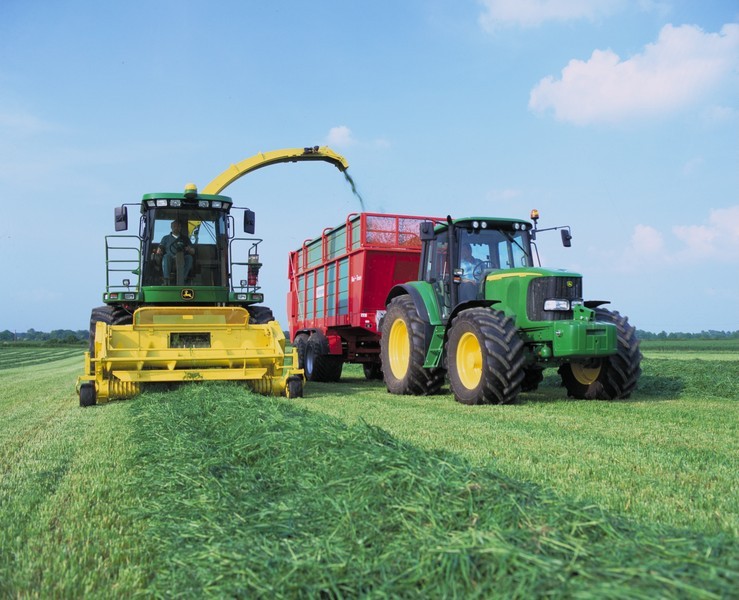
Drought can present several challenges once the crop reaches the clamp. High dry matter crops are typically harder to compact effectively, leaving oxygen trapped within the silage mass. This creates ideal conditions for heating and aerobic spoilage, leading to dry matter losses and reduced feed quality.
Conversely, where plants remain greener due to uneven drought effects, higher sugar levels can drive undesirable fermentation and increase the risk of instability during feed out. For growers dealing with drought-damaged maize, effective clamp management becomes more important than ever.
|
Key priorities include:
• Achieving excellent consolidation.
• Filling the clamp in thin layers.
• Maintaining good sealing practices.
• Ensuring a sufficient feed-out rate to minimise heating.
|
|
Adjusting chop length:
Crop condition should also influence chopping strategy. Where maize has become straw-like and dry, a shorter chop length can improve pack density and reduce the risk of aerobic spoilage. In crops that remain relatively green, a slightly longer chop length can help manage moisture levels while maintaining good fermentation characteristics. Matching chop length to crop condition is an important step in protecting silage quality and reducing storage losses.
The role of silage inoculants:
In challenging harvest conditions, silage inoculants can play a valuable role in preserving nutritional value and improving clamp stability.
For drought-stressed maize with high dry matter content and an increased risk of heating, Pioneer® 11A44 offers a specialist solution designed to enhance aerobic stability and help minimise losses caused by reheating during storage and feed out. Where crops are harvested earlier and still contain greener material with higher sugar levels, Pioneer® 11C33 Rapid React® can support a rapid fermentation, helping achieve a faster pH drop while also improving stability in the clamp.
By supporting efficient fermentation and reducing spoilage risks, inoculants can help growers retain more of the valuable nutrients produced during the growing season.
|
Looking ahead:
The current drought serves as another reminder of the weather extremes increasingly affecting UK agriculture. While yield losses may be unavoidable in some situations, careful crop assessment, timely harvest decisions, and effective silage management can help mitigate the impact on forage quality.
Every field will be different this season, making crop-by-crop evaluation essential. Growers who adapt their harvest and ensiling strategy to the conditions in front of them will be best placed to protect silage quality and maintain livestock performance through the winter months.
For farms dealing with drought-stressed maize this year, the focus should be on preserving every tonne of forage possible and ensuring that what goes into the clamp delivers the greatest value when it comes out.
|
|
|
|
News and views from the Corteva Team
|
|
|
|
VCS Onion Technical and Variety Open Day:
Team Corteva recently attended the VCS Onion Technical and Variety Open Day 2026, where we had the opportunity to meet with growers and industry professionals from across the sector.
Throughout the day, the team enjoyed discussing the latest opportunities and challenges facing onion production, sharing insights and exchanging ideas with visitors. A big thank you to everyone who stopped by to speak with us. We appreciated the conversations and look forward to continuing to support onion growers throughout the season.
|
|
|
|
Get to know Team Corteva:
You might already have seen some of our blogs introducing colleagues from across Corteva. To help you get to know the team better, we've asked each of them a few key questions about their careers, roles and what inspires them.
This month, we're featuring two members of Team Corteva! Meet Caroline Linsdell, who shares her career journey, the importance of embracing new opportunities and why agriculture offers a rewarding path for people from all backgrounds. We're also introducing Matt Barnes, Area Manager for Wales and West England, who reflects on the experiences that have shaped his career, his passion for agriculture and what he enjoys most about supporting growers across one of the UK's most diverse farming regions.
|

|
To read Matt's blog, click here. To read Caroline's blog, click here.
|
Want to get to know more of the people behind Team Corteva? Read more colleague stories and blogs here.
|
|
|
Make the most of Corteva's free agronomy apps
Whether you're in the field or at your desk, the Corteva Arable and Forage apps provide quick access to technical information, decision-support tools and practical agronomy advice.
Both apps are available for free on both Apple and Android devices, giving you easy access to Corteva expertise wherever you are.
For further information and download links for the Corteva apps, click here.
|

|
|
|
Want to hear more from us?
Update your preferences and tailor your choices to make sure you receive the communications that are right for you. Don't forget to enter into our monthly prize draw by ticking the box before submitting to be in with the chance to win!
You can also stay in the loop with all the latest updates by following @CortevaUK on X and Facebook or @CortevaUKI on Instagram.
|

|
|
|
Get in touch with our hotline team
|
CPD points
Subscribing to Corteva Agriscience's Arable Update gives eligibility for 2 CP BASIS points and/or 2 NRoSO points.
|
USE PLANT PROTECTION PRODUCTS SAFELY. Always read the label and product information before use. For further information including warning phrases and symbols refer to label. ®, ™ Trademarks of Corteva Agriscience and its affiliated companies. All other brand names are trademarks of other manufacturers for which proprietary rights may exist. All manufacturers trade names and trademarks are duly acknowledged. © 2026 Corteva. Broadway® Star contains pyroxsulam and florasulam. Belkar® contains halauxifen-methyl (Arylex™ active) and picloram. Option® contains cymoxanil. Ympact® contains fulvic acid, humic acid, trace elements including copper (0.45%), manganese (0.74%), zinc (1.1%), boron, cobalt and sodium. Instinct® contains nitrapyrin. Kinsidro® Grow+ contains fulvic acid, humic acid, potassium oxide (10%), sodium oxide (3.75%), sulfur trioxide (6.25%), boron (0.04%), cobalt (0.04%), copper (0.04%), manganese (0.04%), molybdenum (0.005%) and zinc (0.05%).  | | | | |