Grassland herbicides following drought conditions
|
Following prolonged dry weather, delay herbicide applications until weeds have resumed active growth after rainfall. Herbicides depend on active growth for effective uptake and translocation, so treating drought-stressed weeds is unlikely to provide satisfactory control.
By late summer, weeds such as docks, nettles and thistles may have flowered and begun setting seed. In these situations, topping the sward will help reduce seed return and encourage fresh regrowth.
Allow 2-3 weeks for weeds to regrow before applying a selective herbicide, ensuring there is adequate soil moisture and active growth. Where appropriate, applying a top dressing of fertiliser can further stimulate regrowth and improve herbicide performance.
|
|
|
Avoid applying herbicides during periods of high temperatures or when crops and weeds are under heat or moisture stress. Where applications are necessary, spray during the cooler parts of the day and always follow label recommendations to maximise efficacy and minimise the risk of crop damage.
|
Preparing grazing ground with heavy weed infestations
|
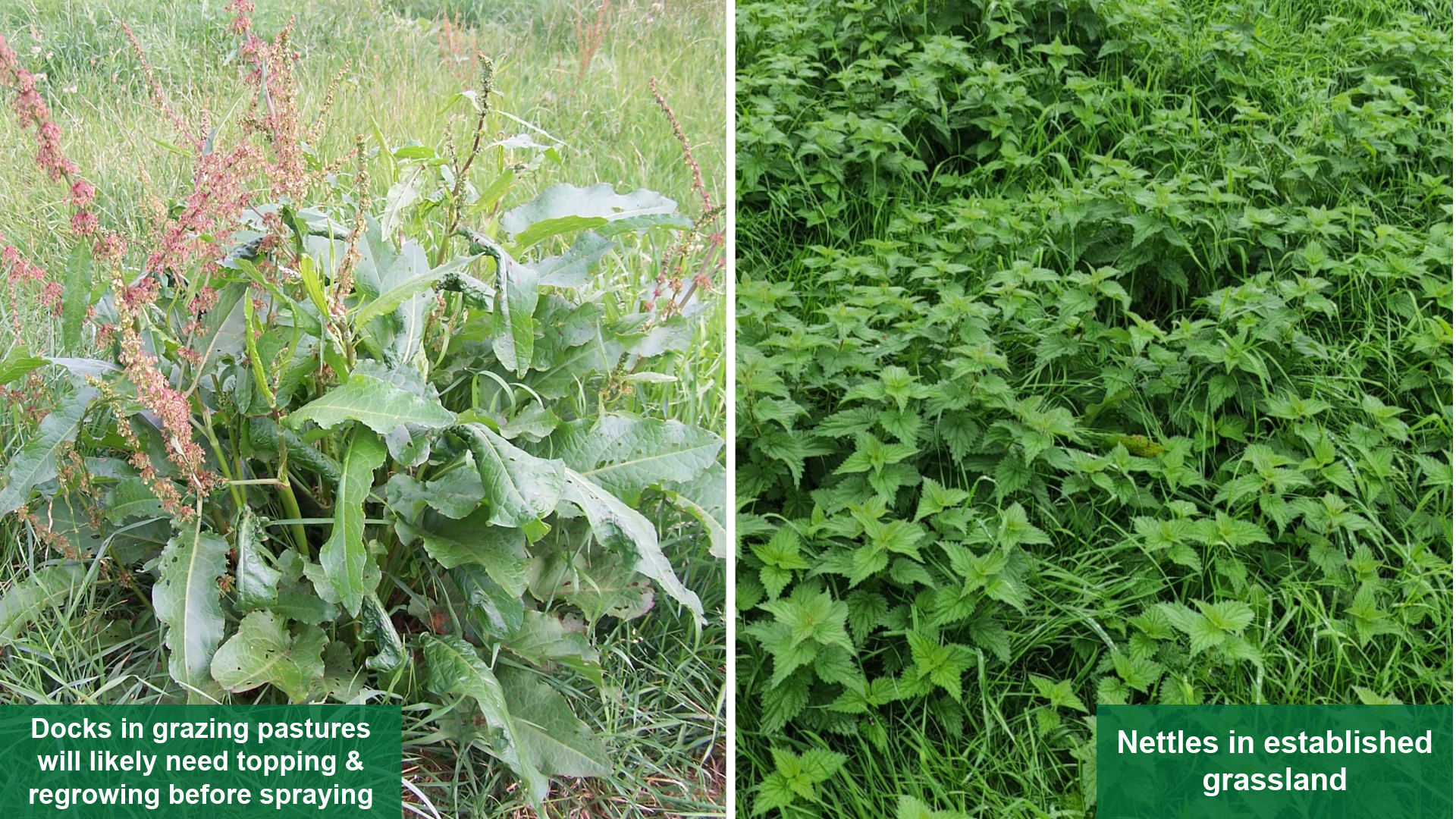
Where grazing fields contain large populations of weeds already in flower, topping is a useful first step to reduce seed return and prevent further spread. Allow sufficient regrowth before applying herbicides in late August or early September, provided soil moisture has returned and weeds are actively growing.
Docks and nettles – Doxstar® Pro
Doxstar Pro provides effective control of docks and nettles in established grassland. Apply to actively growing weeds under good growing conditions to achieve the best long-term results and help improve sward quality.
|
|
|
|
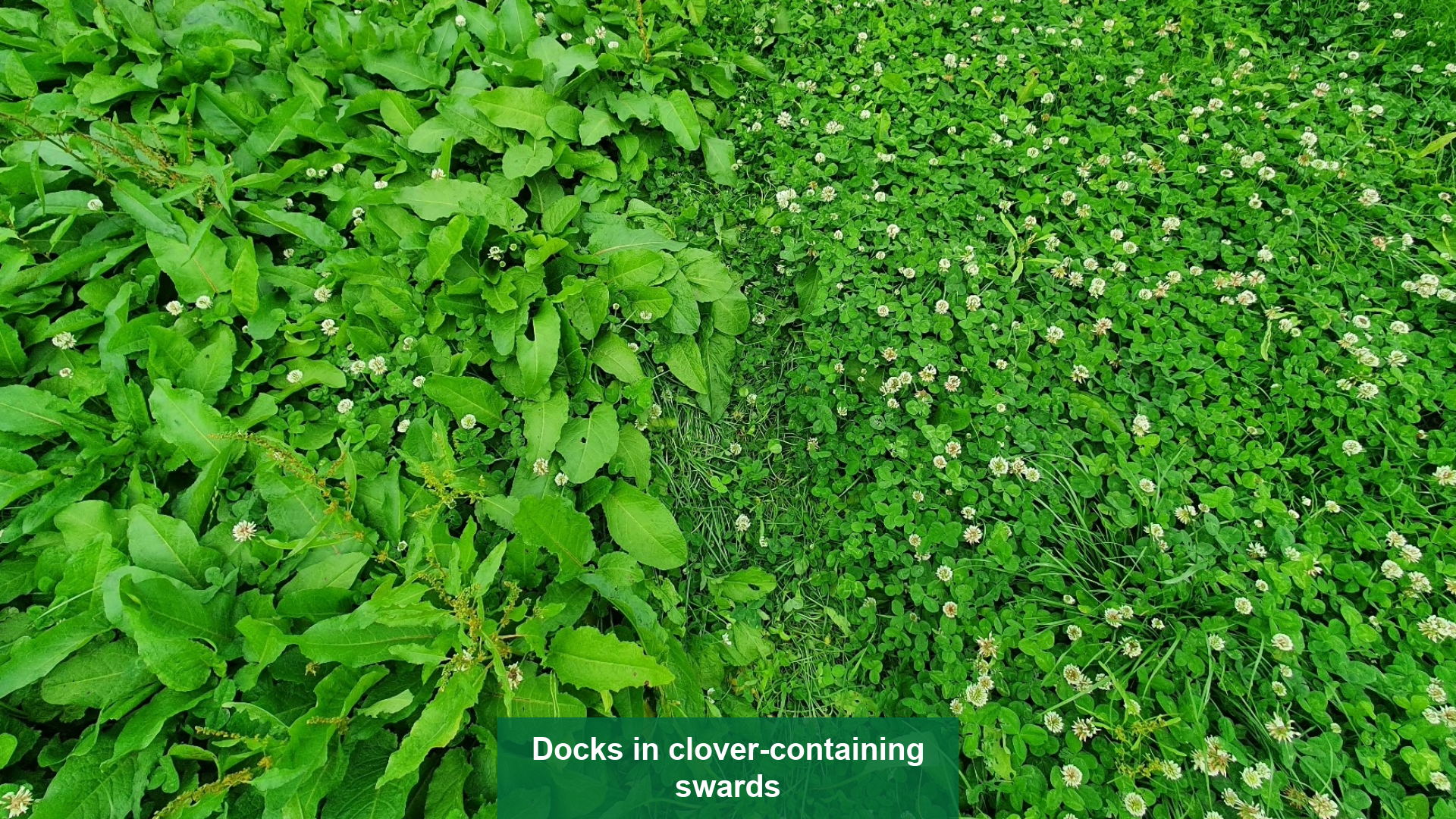
Docks in clover-containing swards – ProClova® XL
Where maintaining clover is important, ProClova XL offers selective dock control while preserving valuable clover populations. Apply to healthy, actively growing docks and follow label guidance to maximise efficacy. ProClova XL can be used up to 31 October on established grassland, subject to temperatures. For best control target ProClova XL applications during August and early September.
|
|
|
|
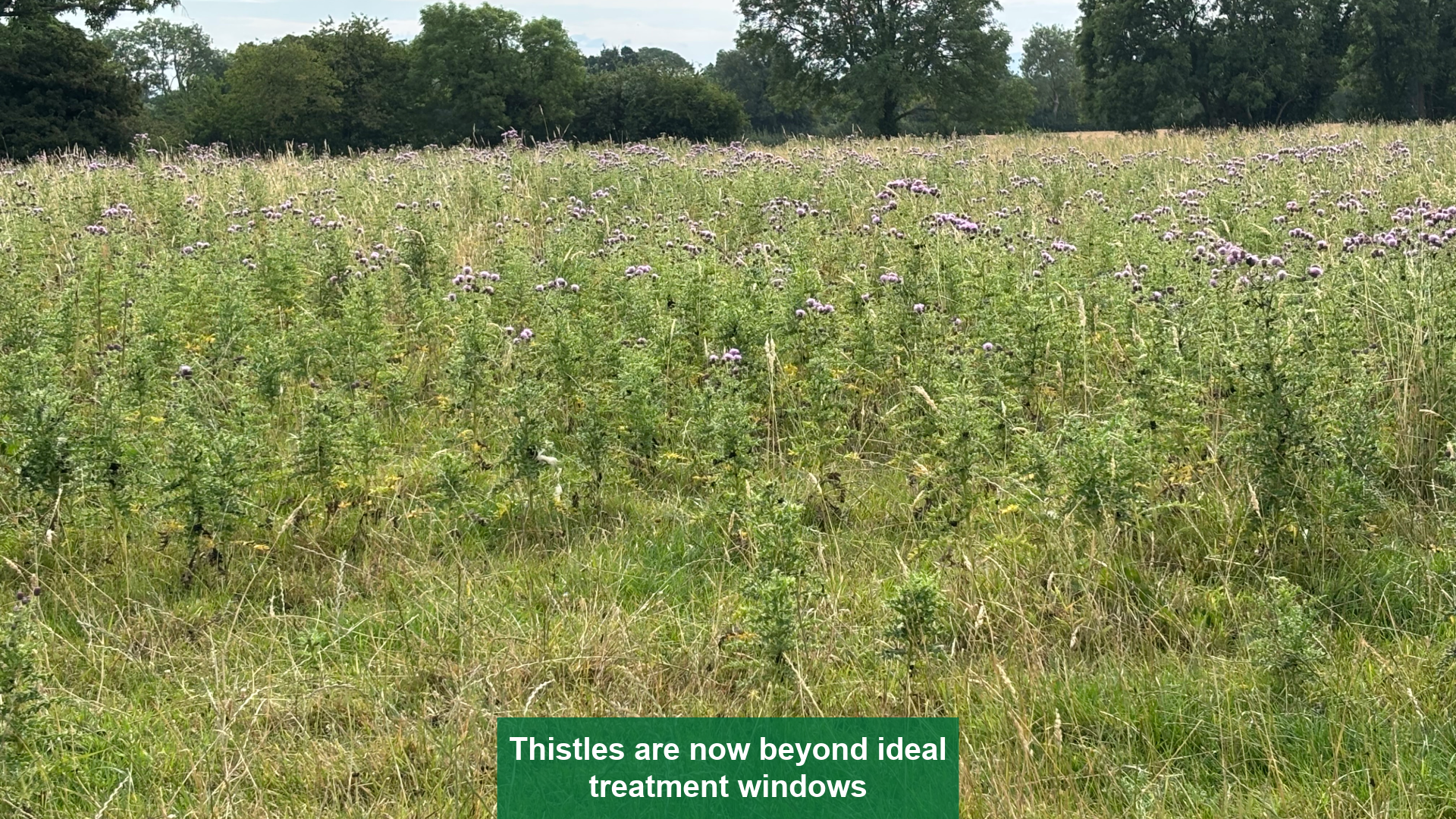
Thistles
Where possible, postpone treatment until 2027 and use Thistlex® Pro when thistles are actively growing. Spraying at the correct growth stage under favourable conditions will give the highest levels of control and reduce the need for repeat applications.
|
|
|
|
|
|
Inoculant choices for high dry matter grass and maize silage
|
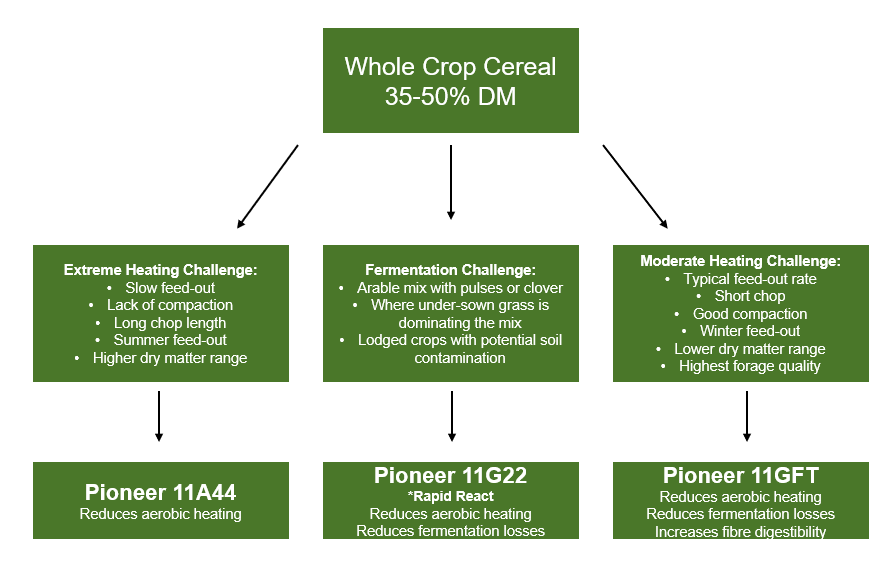
Hot, dry conditions are leading to higher dry matter grass, maize and wholecrop silages. While these crops can produce excellent feed, they are often harder to consolidate, leaving more air in the clamp and increasing the risk of heating caused by yeasts and moulds.
In these situations, inoculant choice becomes increasingly important. Products containing Lactobacillus buchneri are proven to improve aerobic stability by producing compounds that inhibit yeasts and moulds, helping keep silage cooler and reducing dry matter losses during storage and feed-out.
Heating and losses of unstable silage with different dry matter content
|
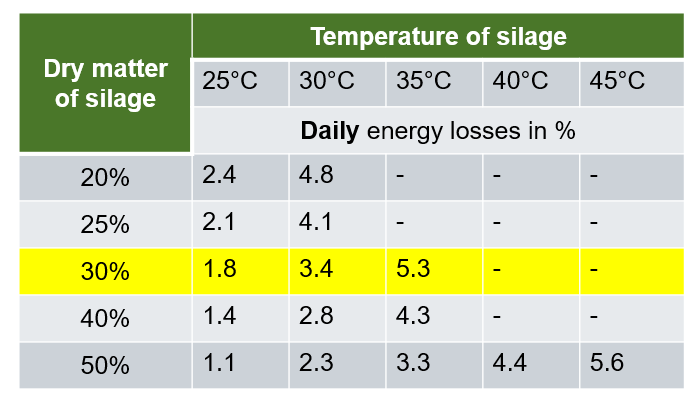
|
Modified after H.Honig and M.K. Woolford (1980), source: Changes in silage on exposure to air., pp.76-87: “Forage conservation in the 80's”; (ed. C. Thomas), Occasional Symposium No.11, British Grassland Society, Brighton; 1979.
*Ref Spiekers, H. (2004) Top Agrar. 2/2004. pR 10-12.
For high dry matter grass silage where aerobic spoilage risk is particularly high, 11A44 is specifically designed to improve stability in the later stages of fermentation and reduce heating losses.
|
|
Combined with good clamp management, rapid filling, thorough consolidation and effective sealing, the right inoculant can help preserve feed quality, reduce losses and maximise the value of every tonne harvested.
Learn more about our silage inoculant range here.
|
|
|
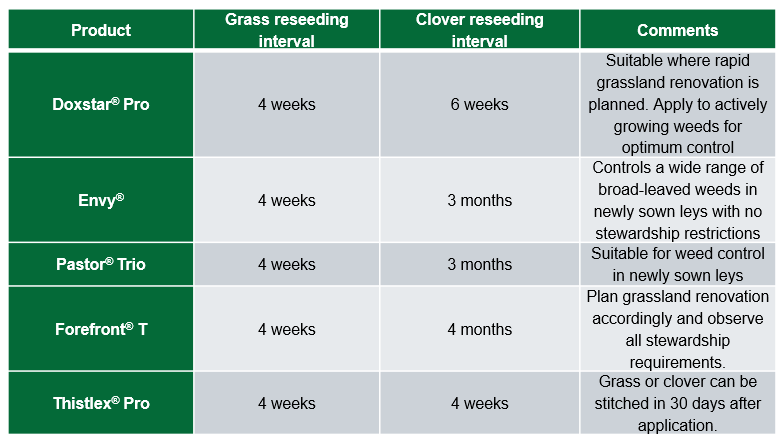
The hot dry conditions will mean that many grass leys have become stressed and may have thinned, reducing productivity and allowing weed ingress. Before planning any grassland renovation or re-seeding, check the product label for minimum intervals between herbicide application and sowing. Following these restrictions helps avoid crop establishment issues and protects the success of the new ley.
|
|
Envy® and Pastor® Trio – newly sown leys
|
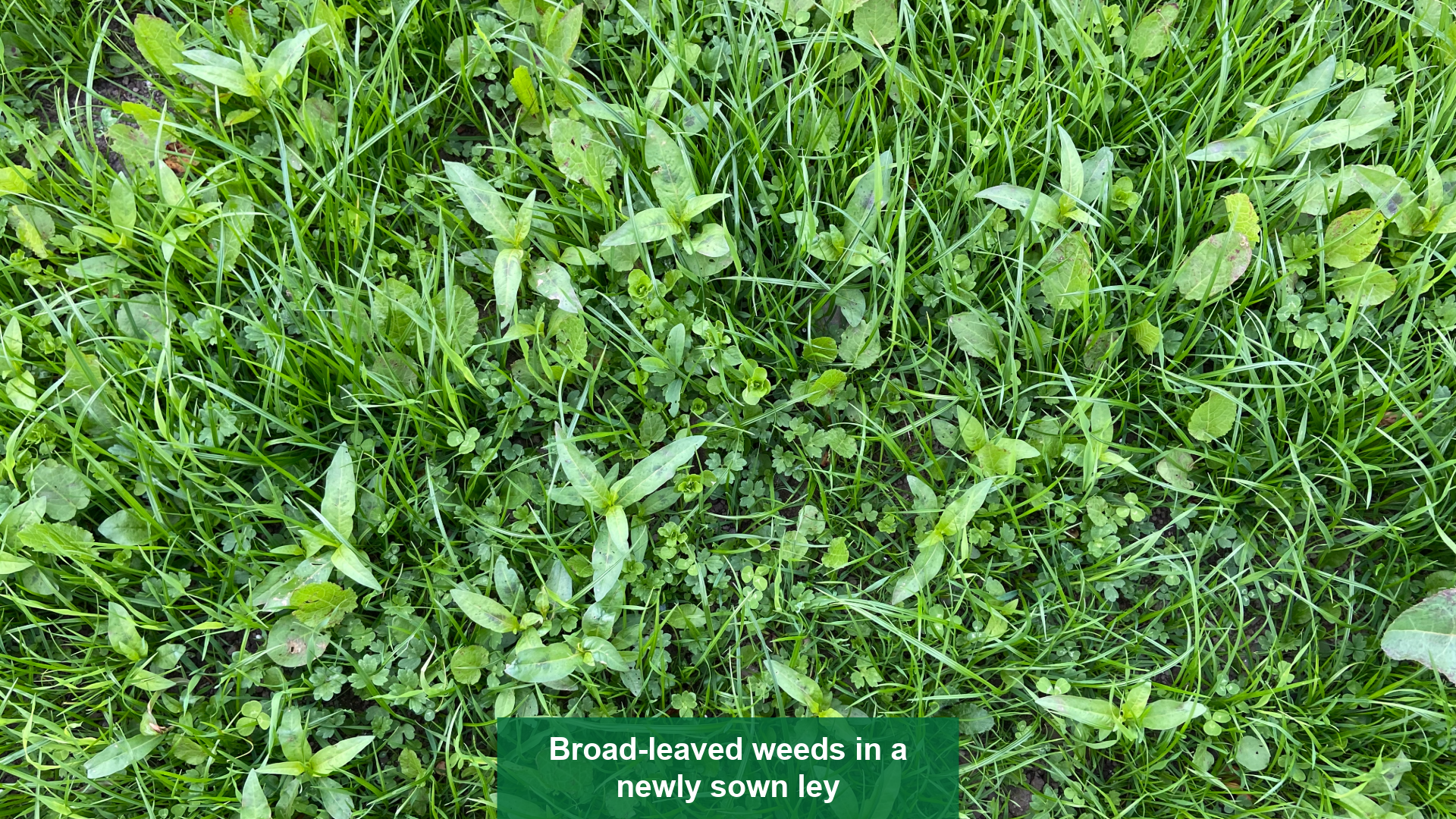
Envy and Pastor Trio are valuable options for controlling broad-leaved weeds in newly sown leys. Early weed control reduces competition, helping young grass establish quickly and produce a productive, long-lasting sward.
|
|
Clover-containing newly sown leys
Where new leys contain clover, choose a clover-safe option such as ProClova® XL in spring 2027. This provides effective dock control while maintaining the benefits that clover brings to the sward.
|
|
|
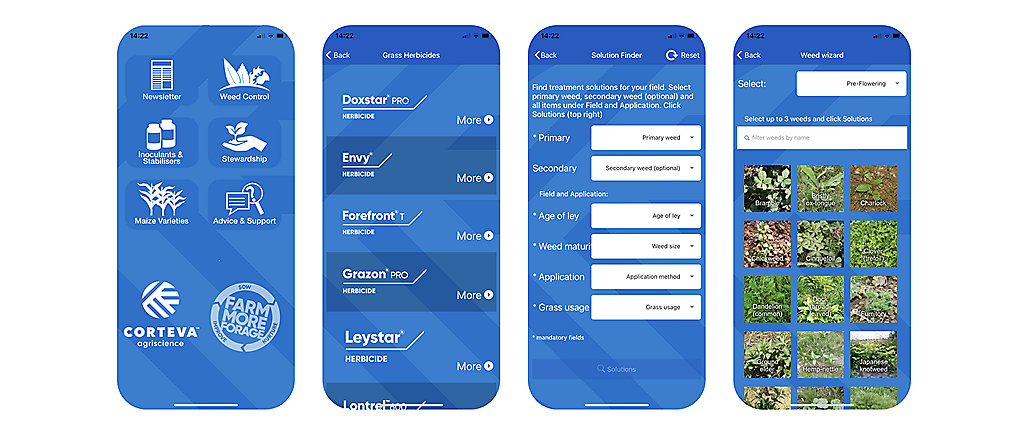
The Forage App provides quick access to product labels, technical information, best practice guidance and stewardship advice. Agronomists and farmers are encouraged to use it as a convenient reference when planning and applying herbicides.
|
|
Maize herbicide season – tank mixes
|
It has been a successful year for Principal® Forte, Corteva’s new maize herbicide. The safener technology built into the formulation has proven itself yet again in what has been a stressful year due to hot dry conditions. The ability to tank mix safely with Starane® Hi-Load has been well received.
As we plan ahead for 2027, please let your local area manager or our hotline team know of any tank mix requests (foliar nutrition or herbicide products) that you have in maize with our herbicides so that we can get these tested well in advance for you.
|
|
|
Q: Which product can be used for hemlock control using knapsack sprayer?
A: Grazon® Pro can be used through a knapsack as spot treatment at a rate of 60 millilitres in 10 litres water, when weeds are actively growing.
Q: When does the approval for Thistlex® change to Thistlex® Pro?
A: Thistlex is not being revoked; however, no further product will be manufactured. Once existing stock has been exhausted, we will switch over to Thistlex Pro. Thistlex Pro is already available.
Q: I want to use Grazon Pro as a spot treatment for docks and nettles, but as it’s so dry, nothing is growing. With the hope that it rains soon, what is the cut off for using Grazon Pro?
A: Cut off for Grazon Pro is 31 October, but weeds need to be actively growing before applying the product.
Q: Apart from ProClova® XL, is there anything else that can be applied to established grassland and keep the clover?
A: Nothing else in the Corteva range.
|
|
|
Our hotline team are also on hand to answer any queries or concerns you have.
|

|
|
|
10 IASIS Points will be awarded for those subscribing to the Forage Agronomy Update.
|

|