|
|
|
|
|
Welcome to our oilseed rape agronomy update
With one of the largest areas of oilseed rape planted in recent years, the crop has got off to a promising start. Recent rainfall in some areas has supported establishment, and where broad-leaved weeds have already been removed, crops are in a strong position heading into the autumn. However, the picture is more challenging in areas where moisture remains limited. Here, cabbage stem flea beetle pressure continues to take its toll, with slower-growing crops struggling to grow away from damage and establish momentum.
In this edition, we provide the latest regional crop updates and share practical advice to help growers stay ahead of weeds, optimise autumn herbicide programmes and set crops up for success.
|
|
|
A programmed approach to weed control
Now is the time to stay focused on herbicide programmes and plan ahead. As weeds increase in size, control becomes more challenging, so growers should consider adjusting herbicide rates where appropriate to maintain robust control. From growth stage 16, Belkar® can be applied at 0.5 l/ha, widening both the spectrum of weeds controlled and the size of weeds that can be successfully targeted.
Attention should also turn to grass weed management and maximising the performance of propyzamide-based programmes. Start by assessing volunteer cereals and grass weeds that may require an earlier graminicide application. For blackgrass and other difficult grass weeds, a programme of clethodim followed by Astrokerb® or Kerb® Flo 500 continues to deliver the highest levels of control.
Successful oilseed rape crops are built through a programme approach rather than a series of individual decisions. Establish the crop well, tackle broad-leaved weeds early, deal with volunteer cereals, and be ready to apply Astrokerb at the optimum timing to control blackgrass, ryegrass and additional broad-leaved weeds.
|
|
In the video above, Corteva's Field Technical Manager, Hugh Guinan, explains why it’s important to maintain momentum with your autumn herbicide programme in oilseed rape. Click on the thumnail to watch on YouTube.
|
|
|
|
|
Field observations from Corteva area managers
|
|
"An increased area of OSR has been planted in the East this year as growers look to reduce cereal and sugar beet crop areas following poor yield performance and crop outlook. OSR prices remain high, and the crop is still achieving one of the highest margins in the arable rotation.
Crops that caught good rain events at drilling, and again subsequently, are looking well. Those supplemented with organic amendments such as digestate, sewage cake or FYM have advanced particularly quickly under the mild conditions, with the earliest crops reaching full canopy as we head towards October.
Later drillings that have then been followed with another three weeks of largely dry weather and wind are struggling to establish and are battling the onslaught of flea beetle. In some parts of the East, it’s 50:50 as to which crops will make it.
Having such an excellent, flexible use window for a post-emergence broad-leaf weed strategy is key; Corteva offers Belkar, LaDiva, Kerb Flo 500, Astrokerb and Korvetto, allowing for full assessment of crop survival before pulling the herbicide trigger."
|
|
"In some areas, the battle against flea beetle continues, with later-drilled crops primarily succumbing to damage. Growth stages vary greatly. In crops that appear to have escaped flea beetle, plants are now up to 6 leaves and are receiving their first applications of either Belkar, at rates ranging from 0.25 to 0.5 l/ha, or LaDiva at 0.25 l/ha. Don’t forget the rate of LaDiva reduces to 0.23 L/ha from the 1st of October."
|

|
"With the rain towards the end of August and early September, a larger area of OSR was drilled this year. Crops went in well and have established strongly, with plenty of broad-leaved weeds coming through too. However, later-sown September OSR is starting to struggle as conditions dry out again, and flea beetle is beginning to make an appearance. Most drilling, along with any redrilling, will now be complete.
It will be a tight window for grassweed and BLW control this year. Weeds already being reported include phacelia from previous SFI mixes, cranesbill, chickweed and sow thistle.
Overall, the OSR crop is looking good, but we desperately need more rain to keep it moving."
|

|
"OSR crops are typically ranging from cotyledon to 4 true leaves. Overall crops are looking good; the strongest crops are those that established quickly and have maintained early vigour. Prioritising early weed control will reduce the competition for water, light, nutrients, and space. Use Belkar to take out broadleaved weeds, followed by either Astrokerb or Kerb Flo 500 later in the season to bring in grass weed control. With CSFB pressure increasing, continue to monitor crops closely for the typical 'shot holing', alongside slug damage in areas where conditions are favourable."
|
|
"In the South and South West, OSR crops were generally planted around the August bank holiday or in the first week of September, when we finally received some moisture. This is late compared with ‘normal’ years in other parts of the country, but fairly standard practice for the South. Our warmer temperatures and recent moisture have driven rapid germination and establishment, and crops are motoring, as are the weeds."
|
|
"Across the area the crop, as is often the case now, falls into two camps – crops that have got their feet into moisture and are away and doing well, and those that have not (the latter being mainly in the south of the region) and are developing slowly. Most crops were drilled into decent seedbeds, albeit early, and where pre-ems were applied, subsequent germinations of weeds are now starting to appear, such as Fumitory and Poppy. Where pre-ems were not applied, there are some large populations of big weeds, such as chickweed, green cover escapees, volunteer potatoes, and docks."
|
|
"Rainfall across the west has helped crop establishment, but many crops still need sustained moisture to build strong growth. Earlier-drilled crops benefited from the late August rain, while later-drilled crops have struggled in drier conditions.
Kinsidro Grow+, a unique blend of fulvic and humic acids, can support establishment when applied as a foliar spray at GS12-16, promoting stronger rooting and helping crops prepare for winter and set up for strong spring growth.
Slugs have been a persistent challenge, with some severe infestations leading to re-drilling. Cabbage stem flea beetle (CSFB) pressure has also increased in recent weeks, adding further stress to young crops. Growers will be hoping for further rainfall to aid establishment, and help crops grow away from pest damage."
|
|
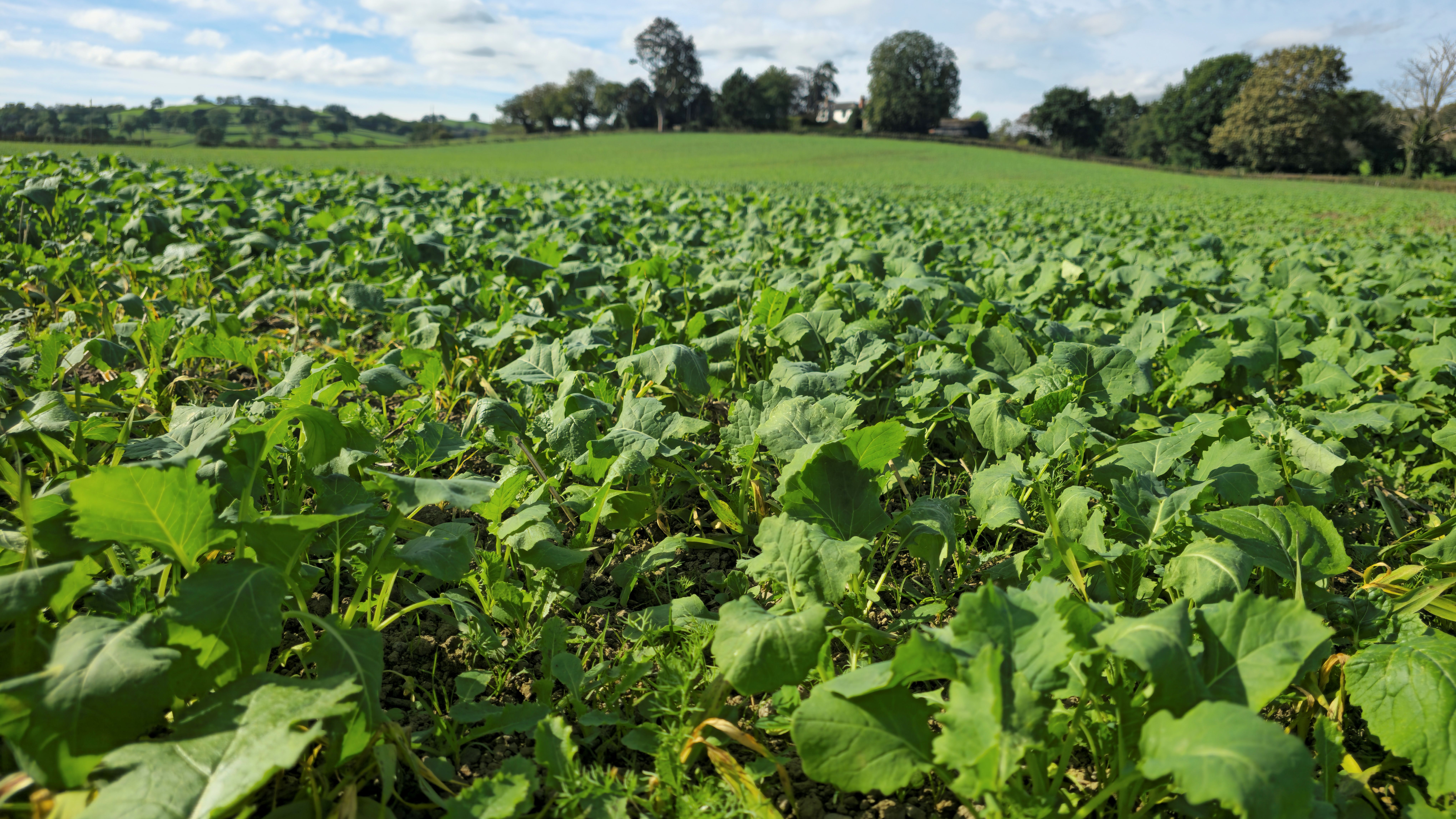
OSR crop photographed by Matt on 25 September 2026. Mayweed can be effectively managed as part of a Belkar followed by Astrokerb programme. While 0.25 l/ha of Belkar alone may not provide sufficient control, 0.5 l/ha would give it a much stronger chance.
|
|
|
|
|
|
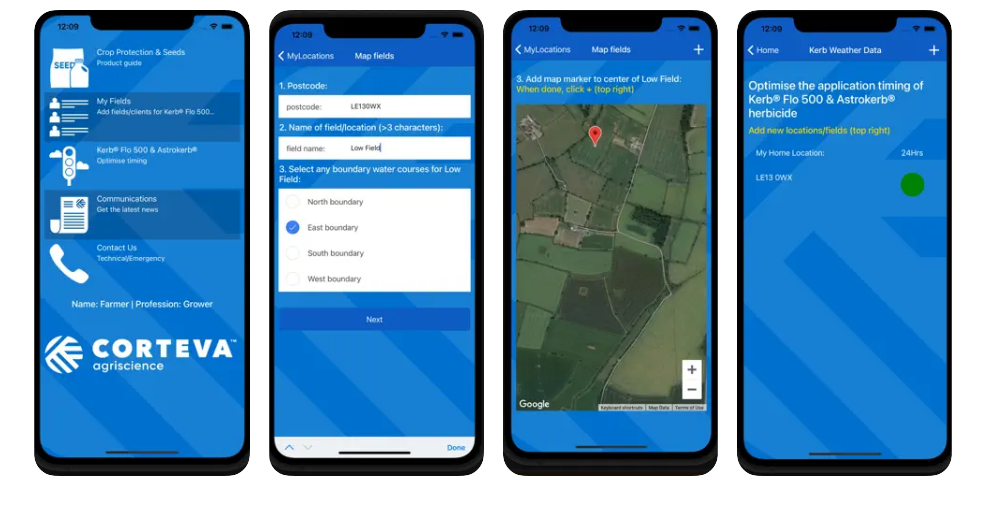
Have you downloaded the Corteva Arable App to access Kerb Weather Data?
The Kerb Weather Data (KWD) tool is meant to be used as a guide to local weather conditions to aid growers and advisors in making local tactical decisions to optimise their Astrokerb and Kerb Flo 500 applications and thus their activity against blackgrass.
- Access up-to-date application information for your postcode.
- Pin point your fields to check if conditions are suitable for propyzamide herbicide applications to winter oilseed rape.
- Mitigate against run off by checking the slope of your field.
- An indication of soil type is also built in.
- Manually add water boundaries to individual fields.
- Agronomists can also check postcode information for their farmer clients.
- Increased functionality compared to the Kerb Weather Data web tool.
Search “Corteva Arable” on Google Play or the App Store.
You can also sign up to the Kerb Weather Data for digital newsletters direct to your inbox – these will start later in October.
|
|
|
|
Starting to think about propyzamide for blackgrass or ryegrass control?
Here are a few things to remember:
- Propyzamide works best when the soil temperature at 30cm is 10°C and falling, with some soil moisture. This means waiting until the end of October/November in most seasons.
- Trials have shown, using clethodim followed by Astrokerb or Kerb Flo® 500, gives the best control of blackgrass. Ensure propyzamide is applied at the correct time and the right rate for the levels of blackgrass.
- If applying clethodim – remember to leave a 2-week gap before and after application.
- Remember for propyzamide – apply at the Right rate, Right conditions, Right time.
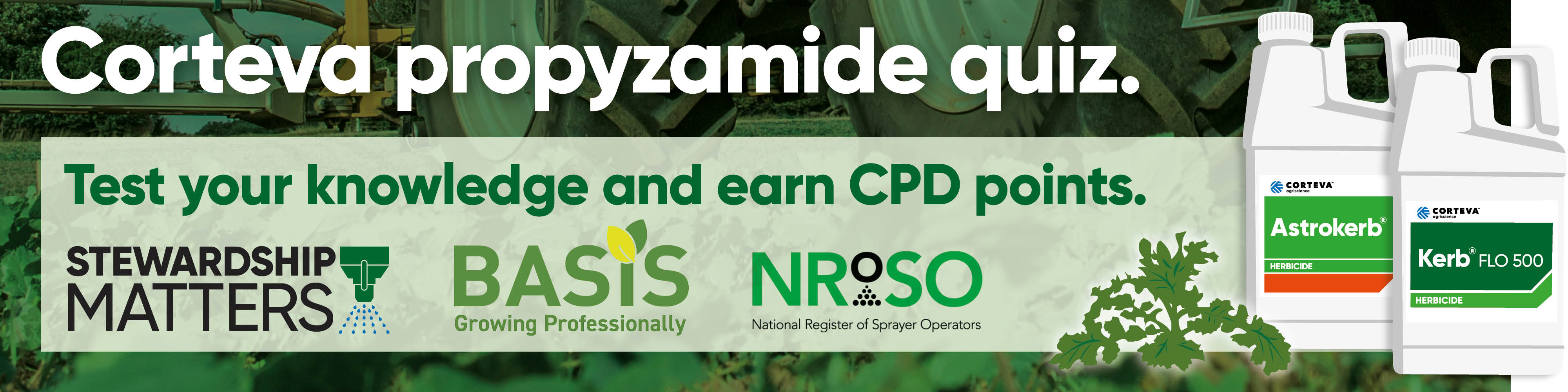
Now is the time to boost your propyzamide know-how with our Back-to-Basics Knowledge Hub. You'll learn how propyzamide works, how to apply it for optimal results, and get practical advice on responsible use. Test your knowledge with our quiz to earn 3 BASIS and 3 NRoSO CPD points. Visit: www.corteva.com/uk/propyzamide.
|
|
|
|
Your hotline questions answered
Can Belkar be mixed with boron?
Yes, there used to be a label restriction preventing the tank mix but this has now been removed.
Will Belkar control fat hen?
Belkar at 0.5 l/ha will control fat hen up to 8cm in size.
What is the best way to control chickweed in my OSR crop?
Belkar at 0.5 l/ha will offer moderate control to chickweed up to 8cm in size. This can either be tank-mixed or followed up with an application of propyzamide but control may be reduced if the weed is well established, i.e. beyond 10cm.
Apart from blackgrass what other grass weeds will Kerb Flo 500 control?
Kerb Flo 500 at 1.5 l/ha offers moderate control of blackgrass from 2 true leaves to mid tillering. It will also control bent grasses, brome species, meadow grass and ryegrass species.
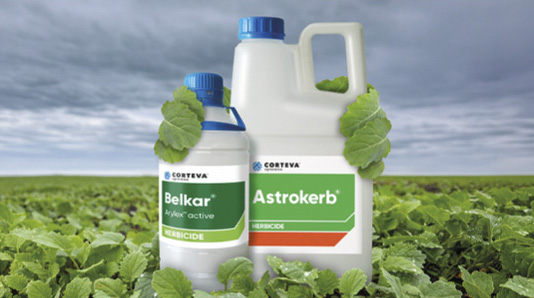
Where can I find your herbicide product pages and latest technical information?
Click on the links below to be directed to our product pages.
|
|
|
|
|
|
|
OSR Insights with James Wombwell, Rectory Farm, Cambridgeshire
Featuring James Wombwell and Farmacy agronomist Rory Kissock
J D Wombwell & Son farm approximately 900 hectares of owned, rented and contract-farmed arable land in Cambridgeshire, alongside livestock grazing enterprises based at Rectory Farm, Ickleton.
Over the past season, we visited James Wombwell and his agronomist, Rory Kissock of Farmacy, to discuss their approach to growing oilseed rape, the challenges facing the crop, and the practical steps they are taking to maximise establishment, resilience and profitability.
Through a series of on-farm visits, we saw how Pioneer oilseed rape varieties and Corteva herbicide programmes are performing in a commercial farming environment, while gaining valuable insights into the realities of growing OSR today. Just as importantly, these discussions helped us better understand the challenges and opportunities facing growers, and how we can continue to support successful OSR production in the years ahead.
This year marks a major milestone for the Wombwell family, who are celebrating their 100th harvest at Rectory Farm. The occasion coincides with Pioneer also celebrating its centenary year, making it a fitting opportunity to reflect on the role of innovation in supporting the future of UK oilseed rape production.
We would like to thank James and Rory for their time, openness and willingness to share their experiences and insights as contributors to this article.
Click here to read the article.
|
|
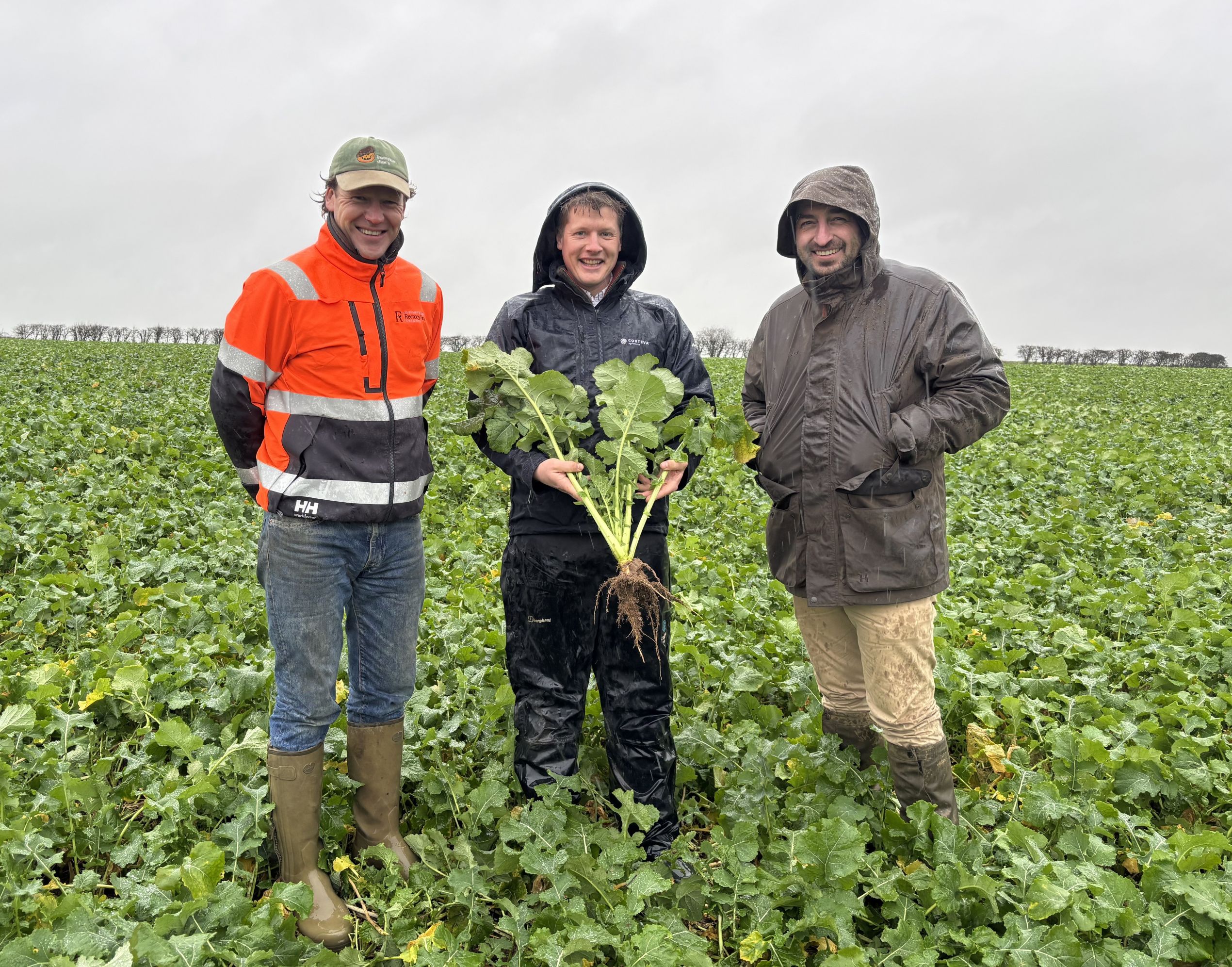
A field of Pioneer PT303 with LaDiva applied: James Wombwell (Rectory Farm), Tom Rouse (Corteva Area Manager), Rory Kissock, (Farmacy agronomist), December 2026.
|
|
|
A new chapter for Pioneer
From 1 October, Vylor, the company that will be home to the Pioneer® business and Corteva's advanced seed and genetics portfolio, will begin operating independently from Corteva Agriscience.
While our organisational structure is changing, our commitment to supporting growers remains the same. From 1 October, Pioneer product information, technical support and customer contacts for the UK and Ireland will be available through dedicated Pioneer channels.
We look forward to continuing to support growers, customers and industry partners as Pioneer begins this exciting new chapter.
|

|
|
|
|
|

|
Use plant protection products safely. Always read the label and product information before use. For further information including warning phrases and symbols refer to label. ®™ Trademarks Corteva Agriscience Limited and its affiliated companies. All other brand names are trademarks of other manufacturers for which proprietary rights may exist. All manufacturers trade names and trademarks are duly acknowledged.
 | | | | |